

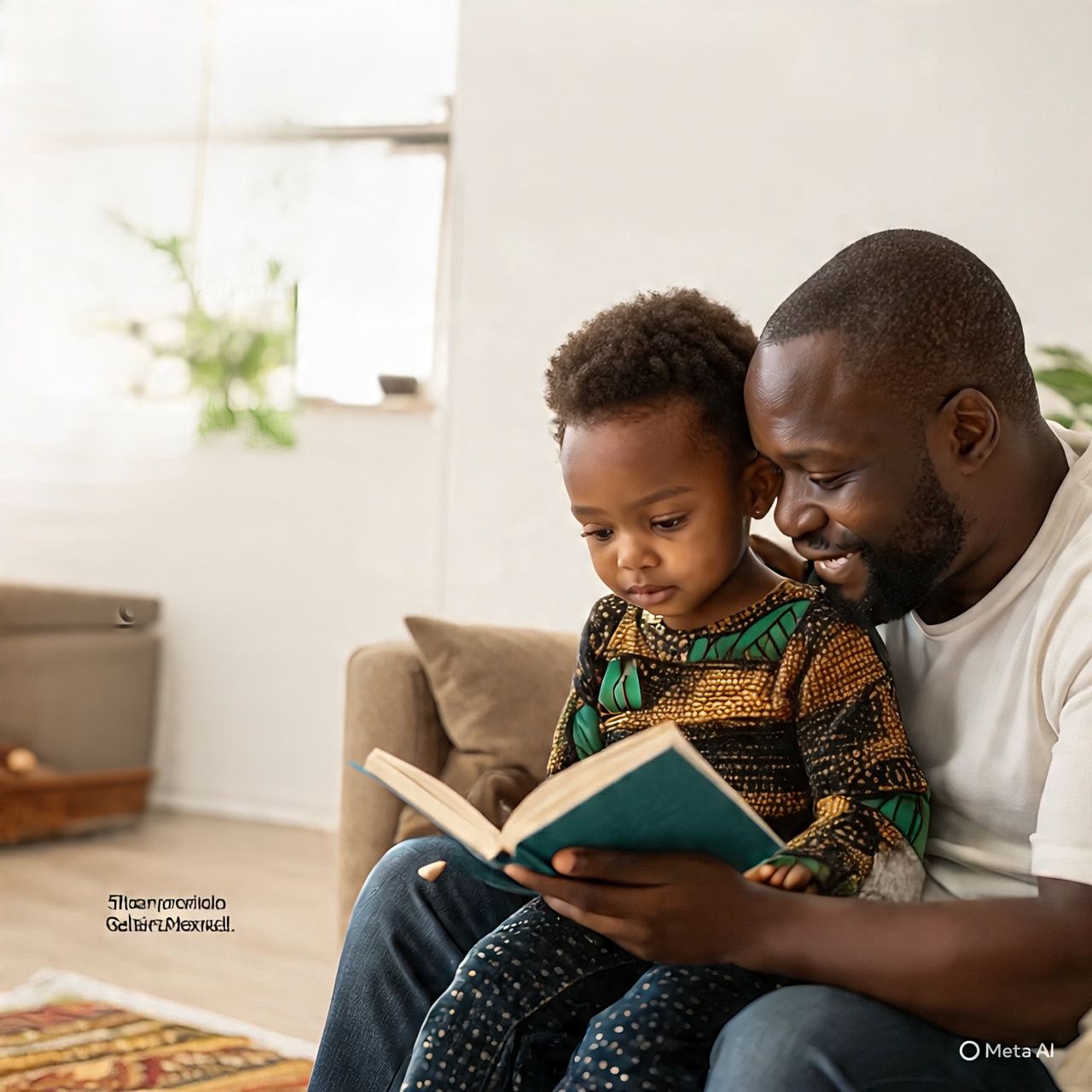
When Fathers Are Present Physically but Absent Emotionally
Across many homes in Africa and around the world, there is a quiet challenge that rarely receives the attention it deserves. In many families, fathers are present physically. They provide food, shelter, education, and financial stability. Yet for many children, something important is still missing.
Emotional connection.
In cities such as Accra, Johannesburg, and Nairobi, many fathers work tirelessly to support their families. Their sacrifices are real and often admirable. However, emotional presence requires more than provision. It requires attention, conversation, listening, and intentional guidance. Children do not only remember what their fathers provided. They remember how their fathers made them feel.
The American author and leadership expert John C. Maxwell once wrote, “A child who is allowed to be disrespectful to his parents will not have true respect for anyone.” Yet respect in a home is not built through fear alone. It grows from connection, time, and communication. Many fathers today carry enormous pressure. Economic responsibilities, long working hours, and the expectation to be strong providers often leave little time or emotional energy for deeper engagement at home. But children interpret silence differently.
When a father is physically present but emotionally distant, a child may begin to believe that their thoughts, struggles, or dreams are not important. Over time this can shape their self-esteem and influence how they build relationships later in life.
The famous American civil rights leader Martin Luther King Jr. once said, “The function of education is to teach one to think intensively and to think critically.” Yet education begins long before the classroom. It begins in the home, where children learn identity, confidence, and emotional security.
Fathers have the power to shape these foundations.
A father who listens to his child’s questions builds confidence. A father who encourages effort builds resilience. A father who speaks words of affirmation builds a child’s sense of worth.
The writer William Shakespeare once observed, “It is a wise father that knows his own child.” Knowing a child requires presence not only in body, but also in heart.
Emotional presence does not require long speeches or dramatic gestures. Sometimes it is found in small moments. A conversation after school. A shared walk. A simple question such as, “How are you really doing today?” These small moments create lasting memories. Communities that raise emotionally supported children build stronger families, stronger leadership, and healthier societies.
A Call to Action
Parents, community leaders, and mentors must recognize the powerful role fathers play in shaping the emotional health of children. Encouraging fathers to engage emotionally with their sons and daughters can transform families and communities. Through InspireMind Global, Dr. David Rex Orgen continues to advocate for stronger family relationships, youth mentorship, and mental health education across Africa and the diaspora.
For counseling services, speaking engagements, workshops, or partnerships, contact:
Dr. David Rex Orgen, Best-Selling Author | International Mental Health Expert Founder and President, InspireMind Global | Phone: +1 (614) 753-3925 | Website: inspiremindglobal.com
Strong societies are built in strong homes. And strong homes begin when fathers are not only providers, but also present in heart and in spirit. Keep the faith and share the hope.

Archives
Recent Posts

Amina’s Education Opens a Family Conversation

Jose’s Knock at the Door: Living With Uncertainty

Sani’s Lagos Promise and the Weight of Family Hope
Tags
+1 (614) 753-3925
info@inspiremindglobal.com