


The Illness We Do Not Always See
When people speak about disease in Africa, the focus often turns to conditions that can be tested, diagnosed, and treated with medication. Illnesses such as malaria, hypertension, and diabetes are widely recognized and discussed.
Yet there is another condition that affects many people just as deeply, though it often goes unnoticed.
Unaddressed emotional stress.
Unlike physical illness, it does not always present clear symptoms. It does not demand immediate attention. Instead, it settles quietly into daily life. It exists in the man who carries responsibility without rest, in the woman who gives constantly but feels unseen, and in the young person who appears fine on the outside while managing anxiety within.
It is present, but often unspoken.
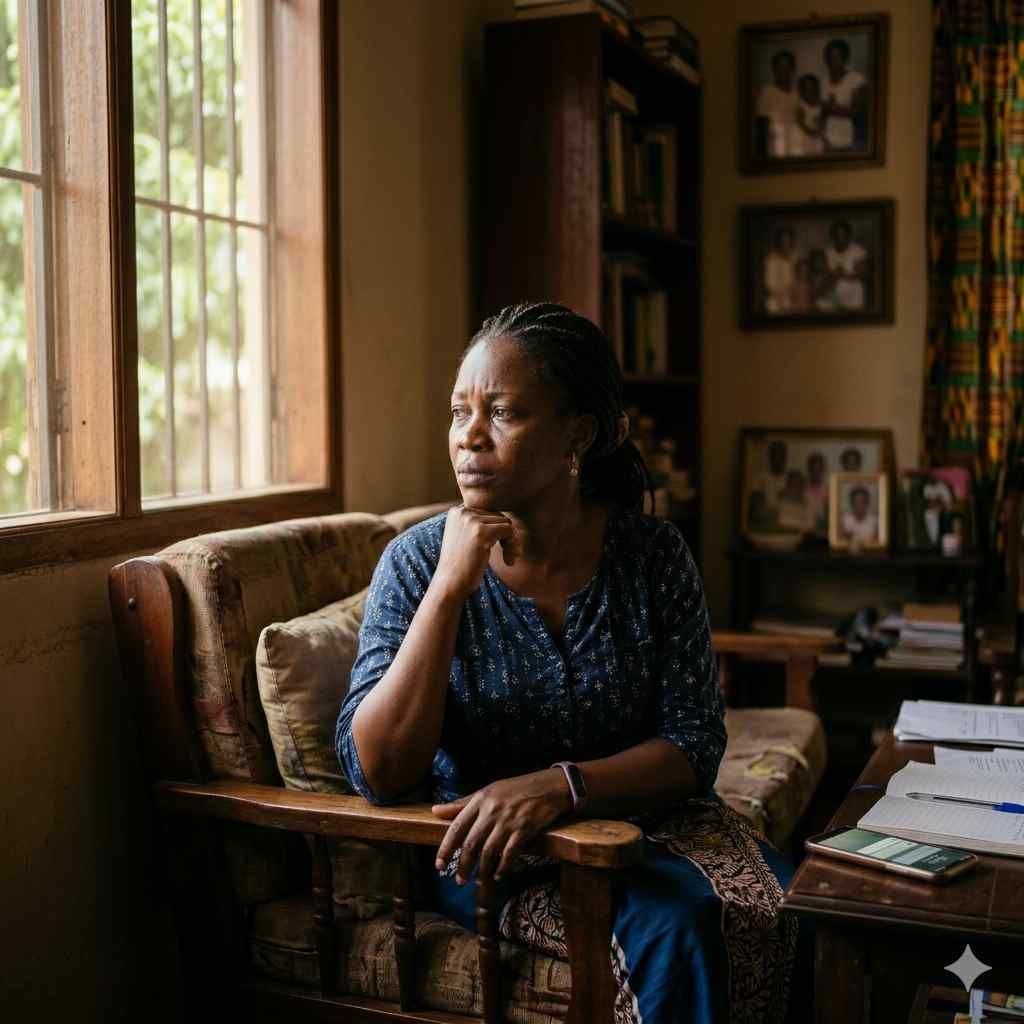
Amina’s story reflects this reality.
She was known for her strength and reliability. People depended on her. She worked hard, supported her family, and remained available whenever others needed her. To those around her, she appeared capable and composed.
Internally, however, she felt overwhelmed.
Her experience was not shaped by a single event. It developed over time through continuous pressure, limited rest, and the absence of emotional release. She did not identify it as stress. She simply saw it as part of life.
From a psychological perspective, emotional strain that is not processed does not disappear. It accumulates. Over time, it can begin to affect both mental and physical health. It may present as fatigue, headaches, muscle tension, or difficulty sleeping. In relationships, it can appear as irritability, withdrawal, or emotional distance.
Because these experiences are common, they are often normalized.
However, common does not mean healthy.
Many individuals have learned to cope by continuing to function, even when they feel overwhelmed. They manage responsibilities and meet expectations, but they do not address the underlying emotional weight. This approach allows survival, but it limits healing.
Gabor Maté has emphasized that when people are not taught how to process emotions, they often learn to suppress them. Over time, this suppression can lead to deeper challenges.
Amina eventually reached a point where her body began to respond. She felt persistent fatigue and found it difficult to maintain the same pace. These signals were not signs of weakness. They were indicators that her body required attention.
This moment became a turning point.
Not because everything changed immediately, but because her awareness shifted. She began to ask a different question. What am I carrying that I have not addressed?
This question created space for reflection.
From a psychological standpoint, awareness is the first step toward change. When individuals begin to recognize their internal experiences, they can start to process emotions instead of storing them. This process supports both mental clarity and physical wellbeing.
Moving Toward Balance
Addressing emotional stress requires intentional effort. The following steps provide a starting point:
- Recognize and acknowledge your emotional load without minimizing it
- Create time for rest that supports both your body and mind
- Speak openly with someone you trust about your experiences
- Set boundaries to reduce ongoing pressure
- Practice moments of stillness to reconnect with yourself
- Seek professional guidance when needed
Desmond Tutu spoke about the importance of maintaining hope, even in difficult circumstances. This perspective reinforces the idea that change remains possible.
Emotional stress may not always be visible, but its impact is real. Addressing it is essential for long term health and stability.
Healing begins when individuals choose to understand and respond to what they are carrying.
If you are feeling overwhelmed, emotionally drained, or burdened by ongoing pressure, support is available.
Contact
InspireMind Global
Dr. David Rex Orgen
Phone: +1 614 753 3925
Wellbeing improves when emotional health receives the same attention as physical health.
By Dr. David Rex Orgen, Best-Selling Author and International Mental Health Expert

Recent Posts

The Illness We Do Not Always See

When Sugar Becomes a Silent Burden
When Pressure Is Not Just in Your Blood, But in Your Life
Tags
+1 (614) 753-3925
info@inspiremindglobal.com
