

Nabil’s Second Chance at Parent-Teacher Night
Nabil had been looking forward to his daughter’s first parent-teacher conference.
Since moving from Morocco to the United States, he and his wife had made education a priority for their family. Their daughter, Salma, was intelligent and curious. At home, she loved reading, asked thoughtful questions, and often helped her younger brother with his homework.
That was why the teacher’s recent messages worried Nabil. Salma was struggling to participate in class, leaving assignments unfinished, and becoming easily distracted.
Nabil assumed she was no longer taking her education seriously.
A Meeting Filled With Confusion
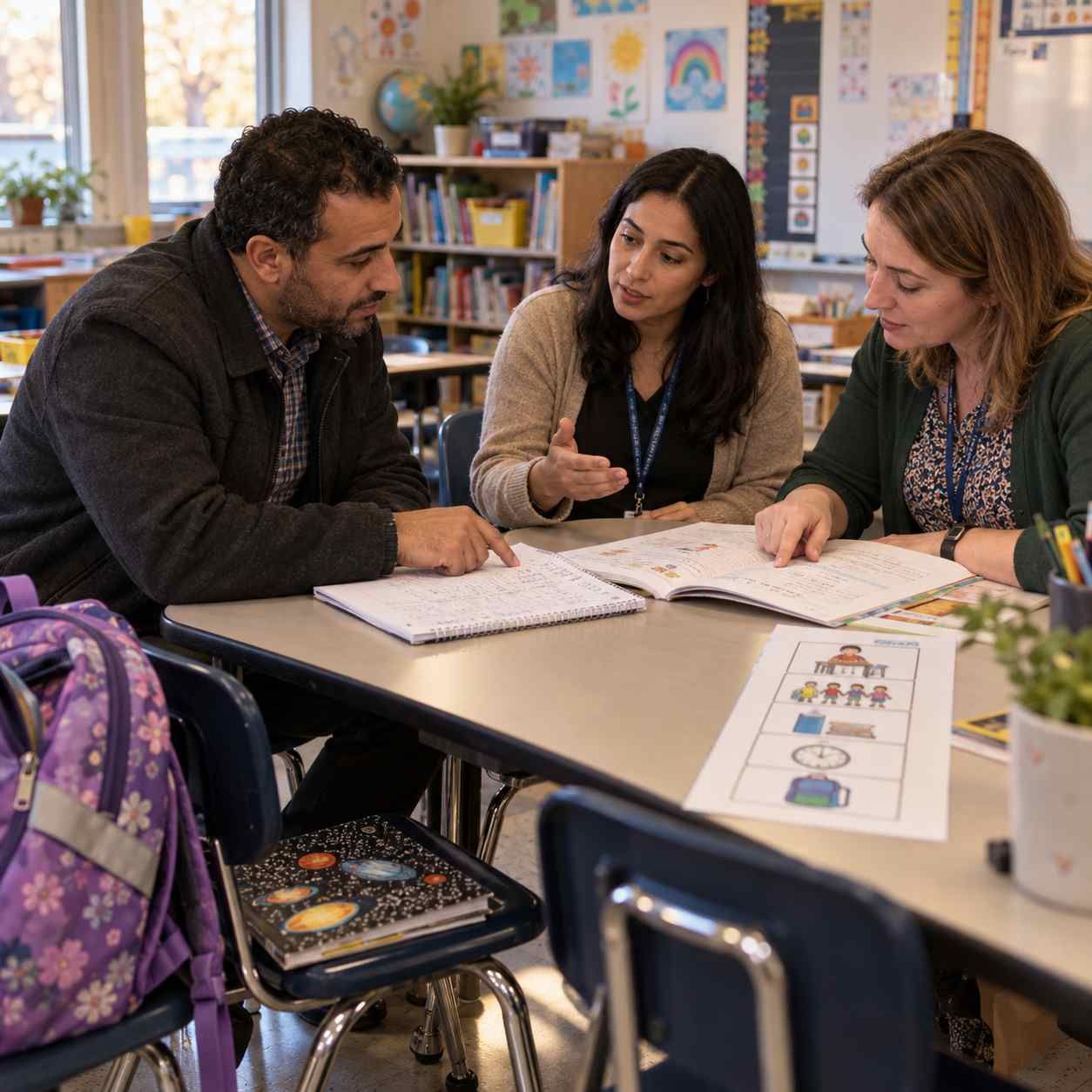
During the conference, Salma’s teacher explained the classroom expectations and the support available through the school. Nabil understood much of what she said, but several educational terms were unfamiliar.
Rather than admit that he was confused, he continued nodding.
He left the meeting carrying documents he did not fully understand and concerns he could not clearly explain. Salma noticed his frustration, and their conversations about school became increasingly tense.
Nabil wanted to help his daughter, but uncertainty had led him to make assumptions about her behavior.
After several difficult days, his wife suggested contacting the teacher again and asking for a clearer explanation.
Returning With Questions
Nabil approached the second meeting differently. He prepared a list of questions and requested language assistance for the terminology he found confusing.
He asked the teacher to give specific examples of Salma’s difficulties. He wanted to understand the proposed classroom support and learn what the family could do at home.
This time, the conversation felt completely different.
Nabil realized that the teacher was not calling Salma unintelligent or accusing the family of neglecting her education. She was trying to understand why Salma struggled with certain activities and how the school and family could support her together.
By asking questions, Nabil replaced fear and frustration with clarity.
Learning a New Educational Culture
For parents raising children in another country, the school system can become an unexpected source of anxiety. Teaching methods, classroom expectations, communication practices, and approaches to student support may differ greatly from what parents know.
Even highly educated and professionally successful parents can feel uncertain in an unfamiliar educational environment.
Language may be one challenge, but it is not always the only one. Ideas about discipline, learning, parental involvement, and appropriate classroom behavior can also vary across cultures.
Silence during a school meeting does not necessarily mean a parent is uninterested. It may mean the parent needs more time, a clearer explanation, or support understanding unfamiliar terms.
Building a Partnership Around the Child
After the second meeting, Nabil began viewing Salma’s education as a partnership rather than a series of complaints he needed to solve.
He listened more carefully when Salma described her school experiences. He also worked with her teacher to create manageable routines that could support her learning.
The family agreed that if Salma’s difficulties continued, they would explore whether additional educational or professional assessment might help. They would seek understanding before deciding what was causing the problem.
Parents navigating an unfamiliar school system should never allow embarrassment to prevent them from asking questions. Request examples, seek language assistance when necessary, and maintain respectful communication with teachers.
Educators must also make space for parents who may need information presented differently.
A successful parent-teacher meeting does more than exchange information. It helps the adults involved begin to understand and support the same child.
By Dr. David Rex Orgen, Best-Selling Author and International Mental Health Expert

Archives
- October 2026
- September 2026
- August 2026
- July 2026
- June 2026
- May 2026
- April 2026
- March 2026
- February 2026
- January 2026
- December 2025
- November 2025
- October 2025
- September 2025
- August 2025
- July 2025
- June 2025
- May 2025
- April 2025
- March 2025
- February 2025
- January 2025
- December 2024
- November 2024
- October 2024
Recent Posts

Nabil’s Second Chance at Parent-Teacher Night

Bisi’s Three Small Wins

Yaw’s Empty Lunch Table and the Need to Belong
Tags
+1 (614) 753-3925
info@inspiremindglobal.com