

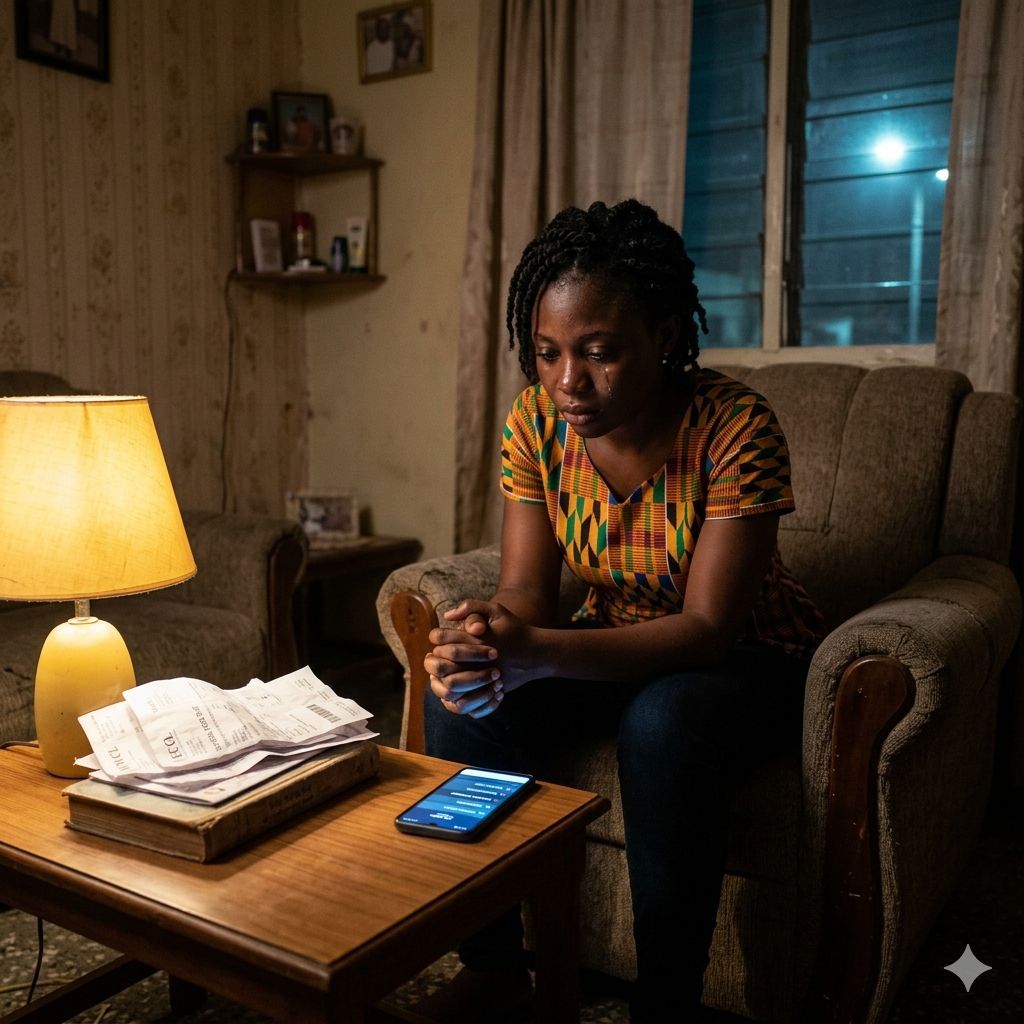
Absence of Financial Liquidity: A True Story of Abena Adaaba
From the outside, Abena Adaaba looked successful.
She dressed neatly, carried herself with confidence, attended church faithfully, and encouraged people around her whenever they felt discouraged. She smiled often. She spoke with dignity. Many people admired her strength and assumed her life was stable.
But behind closed doors, Abena was emotionally exhausted.
She had a job. She had responsibilities. She had goals and dreams for her future. What she did not have was financial breathing space.
Money passed through her hands faster than she could control. Every month felt like a race against bills, debt, and pressure. Rent waited. Utility payments piled up. Family members depended on her financially. Unexpected expenses appeared constantly. Sometimes, before one problem ended, another one arrived.
There were mornings she sat quietly in her car before work, fighting back tears because her account balance could barely cover fuel for the week.
Yet nobody around her knew.
What affected her deeply was not only the financial pressure itself. It was the emotional shame attached to it.
In many communities, people celebrate appearances but rarely discuss survival. Social media has made this even worse. Many people feel pressured to appear successful, stable, and happy even while silently struggling emotionally and financially.
Abena became skilled at pretending everything was okay.
She attended social gatherings while mentally calculating overdue payments in her head. She smiled during conversations while carrying anxiety internally. She avoided certain phone calls because she feared creditors or people asking for money she simply did not have.
Slowly, the pressure began affecting every area of her life.
Psychologically, financial stress affects far more than money. It affects emotional stability, sleep, confidence, relationships, concentration, and physical health. When people live under constant financial pressure, the brain often stays in survival mode.
Dr. David Rex Orgen explains that prolonged financial hardship can create emotional exhaustion because the mind never fully rests. The brain remains constantly alert, searching for solutions, preparing for emergencies, and worrying about what could go wrong next.
“Financial stress is not only an economic issue,” Dr. David Rex Orgen said. “It is also a psychological burden. When people feel trapped financially, it can slowly affect their confidence, emotional balance, and sense of hope.”
For Abena, the signs became impossible to ignore.
Her sleep became irregular. Some nights she stayed awake thinking about unpaid bills and responsibilities waiting for her the next morning. Her concentration at work dropped because her mind was constantly occupied by financial worries.
Even simple decisions became emotionally heavy.
Should she pay one bill and delay another?
Should she help family members or protect her own survival?
Should she continue trying to maintain appearances or admit she was struggling?
The pressure became overwhelming.
Over time, she started withdrawing emotionally from people. Not because she hated them, but because shame made her feel isolated. She feared judgment. She feared looking unsuccessful. She feared disappointing people who believed she had everything under control.
One evening after another emotionally draining day, Abena sat alone in her apartment and finally admitted something to herself she had been avoiding for years:
“I am tired of pretending.”
That moment became the beginning of change.
Instead of continuing to suffer silently, she made a difficult but important decision. She chose honesty over appearances. Healing over hiding.
Slowly, she began rebuilding her life step by step.
She spoke to a trusted financial mentor who helped her understand her spending patterns and priorities. She created a realistic budget instead of living in constant reaction to emergencies. She reduced unnecessary pressure to impress people. She learned to say “not now” without guilt when others expected financial help she could not provide.
Most importantly, she stopped measuring her worth by her financial condition.
That shift changed everything.
Psychologically, healing begins when people separate their identity from their temporary struggles. Many individuals silently believe that financial hardship means personal failure. But hardship is not always proof of laziness, weakness, or lack of value.
Sometimes people are carrying invisible burdens while still trying to survive with dignity.
Abena’s emotional recovery did not happen overnight. There were still difficult days. There were still financial challenges. But emotionally, something became different.
She stopped living in constant shame.
She became more intentional with her money, more honest with herself, and more compassionate toward her own humanity. Instead of constantly comparing herself to others, she focused on stability, growth, and peace of mind.
Slowly, her confidence returned.
Her story reflects the reality many people are quietly facing across the world. Behind polished appearances are individuals battling debt, unemployment, financial instability, family pressure, emotional burnout, and fear about the future.
Some are surviving paycheck to paycheck.
Some are supporting entire families alone.
Some are carrying financial responsibilities nobody else sees.
Some are emotionally exhausted from trying to appear strong all the time.
Yet many continue suffering silently because society often attaches shame to financial struggle.
As Brené Brown once said, “Shame derives its power from being unspeakable.” The more people hide their struggles, the heavier the emotional burden often becomes.
This is why compassion matters.
If someone appears distant, anxious, or emotionally drained, there may be battles happening privately that nobody sees. Kindness matters more than assumptions. Understanding matters more than judgment.
Abena’s story is also a reminder that emotional wellness and financial wellness are deeply connected. People cannot fully thrive emotionally while constantly drowning in financial panic and survival pressure.
This is why practical support, emotional guidance, wise planning, and healthy conversations about money are necessary.
If you are struggling financially, remember this clearly:
Your financial condition does not define your value.
Your temporary hardship is not your permanent identity.
And asking for help is not weakness.
Healing begins when shame is replaced with honesty, support, and intentional steps toward stability.
You do not have to carry the emotional burden of financial stress alone.
If financial pressure, anxiety, emotional exhaustion, depression, or overwhelming stress is affecting your mental and emotional well-being, support is available through InspireMind Global and LifeBridge Services LLC.
Counseling, emotional wellness support, and practical guidance sessions are available to help individuals regain emotional balance, rebuild confidence, and move forward with clarity and hope.
Dr. David Rex Orgen
Founder, InspireMind Global
LifeBridge Services LLC
5900 Roche Dr, Suite 435
Columbus, Ohio 43229
Tel: 614-753-3925
By Dr. David Rex Orgen, Best-Selling Author and International Mental Health Expert

Archives
Recent Posts

Leila’s Quiet Classroom: Intelligence Beyond Words

Wanjiku’s Nairobi Silence: Success Without Connection

Chinedu’s Two Homes: When Distance Tests a Marriage
Tags
+1 (614) 753-3925
info@inspiremindglobal.com