

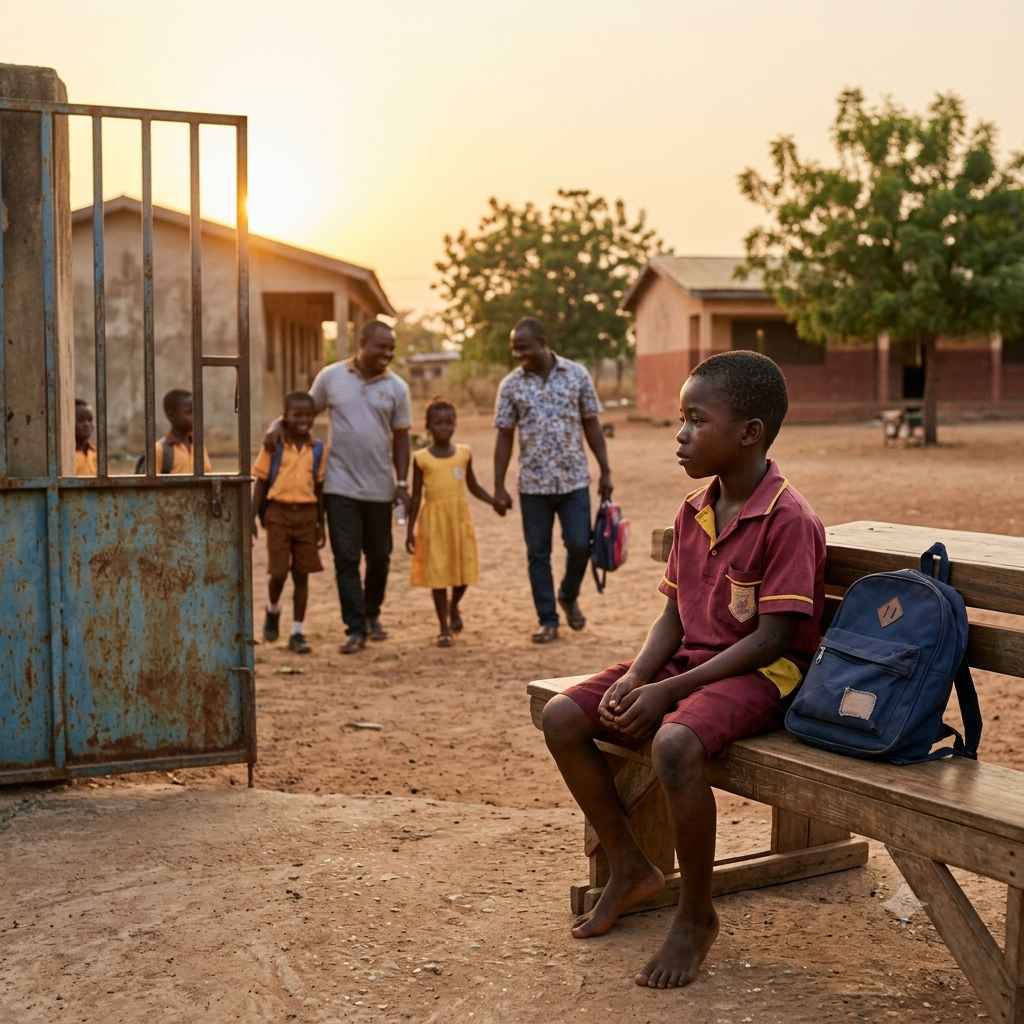
Healing the Pain of an Absent Father
Kofi was only eight when he stopped asking where his father was. At first, he waited by the gate every evening. Each time a car entered the neighborhood, he ran outside, hoping his father had come home. Days became weeks. Weeks became months. Months became years. Finally, he stopped asking. But he never stopped wondering.
His mother worked hard to provide for him. She loved him deeply and gave all she could. Still, some questions were too heavy for her to answer, and some wounds were too deep for her love alone to heal.
As Kofi grew older, he learned to hide his pain. When classmates spoke about playing football with their fathers or attending school events together, he smiled and changed the subject. No one knew that every Father’s Day reminded him of someone who was missing.
When Pain Stays Silent
One afternoon, a teacher found Kofi sitting alone after school. Instead of asking about his grades, she asked, “Who taught you that you had to carry this pain by yourself?”
Kofi had no answer. For years, he thought missing his father made him weak. But the truth was simple: he was carrying a loss he had never been allowed to talk about.
Across Africa and around the world, many children, teenagers, and adults live with the absence of a father. Some fathers died. Some left because of migration, work, war, or broken relationships. Some were present in the home but absent in love, attention, and guidance.
Every story is different, but many hearts ask the same questions: Did he love me? Was I not enough? Would my life have been different if he had stayed?
Signs You May Still Be Hurting
You may still be carrying this pain if you struggle to believe you are enough, constantly seek approval, fear abandonment, find it hard to trust, hide your emotions, or feel anger and sadness when fathers are mentioned.
Father absence does not decide your destiny. Many people grow into strong and confident adults because loving mothers, grandparents, relatives, teachers, mentors, and faith communities helped guide them. But when pain is ignored, it can affect identity, relationships, trust, and self-worth.
The Path Toward Healing
Healing begins when you accept that your pain is real. Stop blaming yourself for someone else’s absence. Allow yourself to grieve what you did not receive. Speak with someone you trust. Seek professional support if the pain still affects your life.
Also, learn to appreciate those who stepped into your life with love and guidance. Choose to become the kind of person you needed when you were younger. Your identity is not defined by who left. It is shaped by who you choose to become.
The absence of a father may explain part of your story, but it does not define your future. You may not have chosen your beginning, but you can choose how the next chapter is written. Sometimes the greatest legacy is not repeating the pain you inherited. It is becoming a source of love, stability, and hope for others.
Today, ask yourself: Is there a part of my life still waiting for healing because of someone’s absence?
Do not ignore the answer. Healing begins with honesty. Whether your father was absent physically, emotionally, or through circumstances beyond anyone’s control, your life still has purpose. You are not forgotten. You are not abandoned. You are not defined by what was missing. You are defined by the hope you choose to embrace and the life you choose to build.
By Dr. David Rex Orgen, Best-Selling Author and International Mental Health Expert

Archives
Recent Posts

Celina’s Road After the Storm: Rebuilding Safety

Thandi’s Foreignness Next Door

When Fitting In at Work Starts to Erase You
Tags
+1 (614) 753-3925
info@inspiremindglobal.com