


When “Strong” Children Are Carrying Too Much
In many homes, there is a child everyone praises.
“She’s so strong.”
“He doesn’t complain.”
“She handles everything on her own.”
These words sound positive. They reflect admiration. They signal maturity.
But in some cases, what we call strength is not strength in the healthy sense.
It is survival.
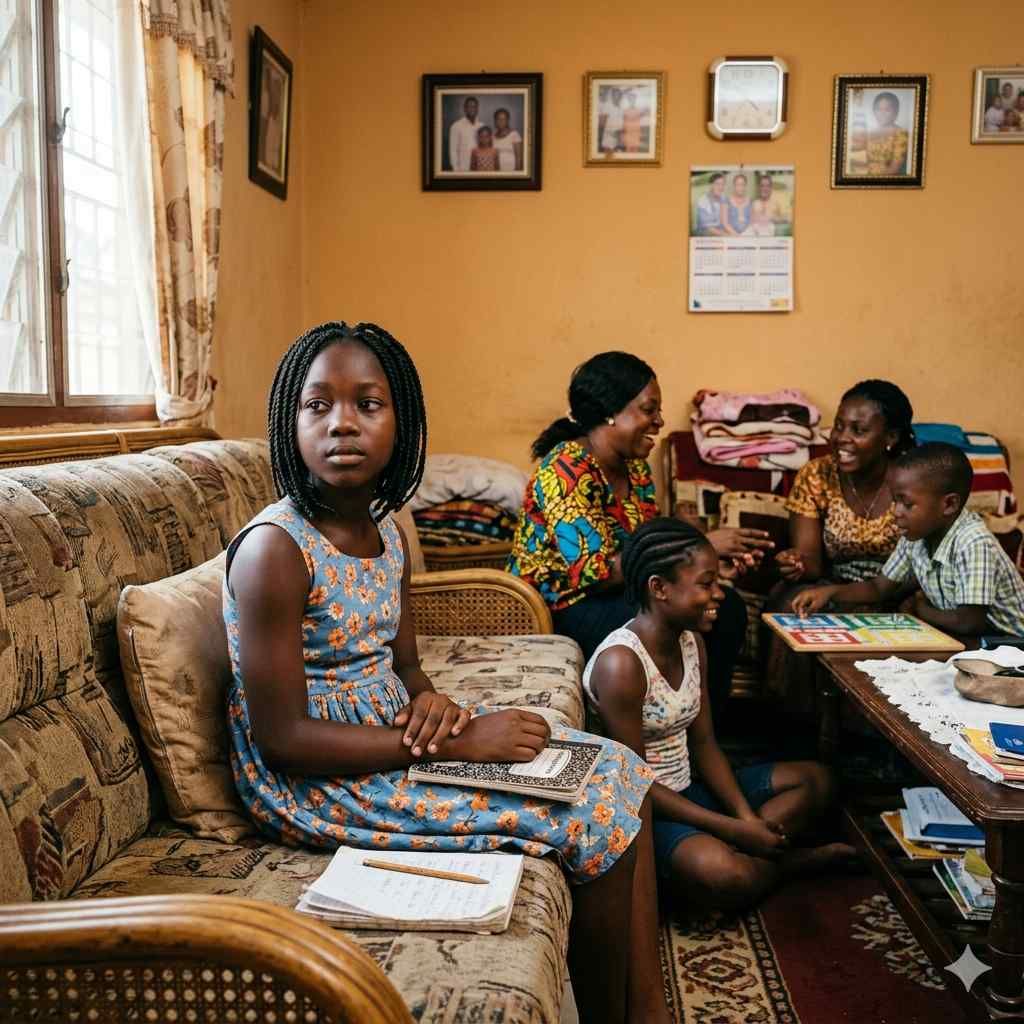
Rosie, a young girl from Morocco, grew up in a home where she had to adjust quickly after changes in her family. The environment required her to be careful. She learned to observe more than she spoke. She watched people closely. She adjusted her behavior to avoid tension.
If voices rose, she withdrew.
If something went wrong, she took responsibility, even when it was not her fault.
She became quiet, controlled, and highly aware of her surroundings.
From the outside, she appeared mature beyond her years.
But internally, a different process was taking place.
She was learning that her needs did not matter.
This pattern is common in children who grow up in emotionally complex environments. They become self-reliant at an early age, not because they are ready, but because they feel they have no choice.
From a psychological perspective, this is a form of emotional adaptation. Dr. David Rex Orgen explains that when children do not receive consistent emotional support, they begin to regulate themselves in ways that limit their development.
They suppress feelings.
They avoid expressing needs.
They become their own support system.
To the outside world, this looks like independence.
But in reality, it often reflects unmet emotional needs.
Children like Rosie are praised by teachers. Admired by relatives. Seen as easy to manage by caregivers.
But few people ask a critical question.
Who is supporting the child who has learned to support themselves?
This early pattern can have lasting effects.
Many children who grow up this way become adults who struggle to trust others. They may avoid asking for help. They may fear being a burden. They often feel responsible for everything around them.
Some overperform to earn approval.
Others remain in difficult situations because they are used to managing discomfort.
Over time, this can lead to emotional fatigue, anxiety, and a deep sense of isolation.
Fred Rogers once highlighted a key truth. When people are given space to express what they feel, they can begin to manage it. But many children like Rosie never receive that space.
They learn to stay silent.
And that silence becomes part of who they are.
This is where awareness becomes important.
A quiet child is not always at peace.
A responsible child is not always supported.
A strong child is not always okay.
Children need more than discipline and structure. They need emotional safety. They need to know that their feelings matter. They need to feel seen, heard, and valued.
How to Support Children Who Appear “Too Strong”
If you are a parent, caregiver, or guardian, consider these steps:
- Create space for open conversations
- Ask how the child feels, not just what they did
- Listen without interrupting or correcting immediately
- Reassure them that they can depend on you
- Avoid placing adult responsibilities on them
- Show consistent care through your actions
These actions help restore balance.
They remind the child that they are allowed to be a child.
For caregivers in blended or complex family settings, patience and consistency are key. Trust does not develop instantly. It grows through repeated positive experiences.
For those who see themselves in Rosie’s story, one message matters.
You were not meant to carry everything alone.
Your strength is real.
But your need for support is also real.
Growth begins when you allow yourself to be seen, heard, and supported.
You do not lose strength by asking for help.
You build a healthier version of it.
If you need guidance, support, or counseling, help is available.
Contact
InspireMind Global
Dr. David Rex Orgen
Phone: +1 614 753 3925
Every child deserves care, not just expectations.
By Dr. David Rex Orgen, Best-Selling Author and International Mental Health Expert

Recent Posts

When Inheritance Divides the Family

What Leaving Home Teaches Us About Belonging

Your Next Purpose Begins After Retirement
Tags
+1 (614) 753-3925
info@inspiremindglobal.com
