


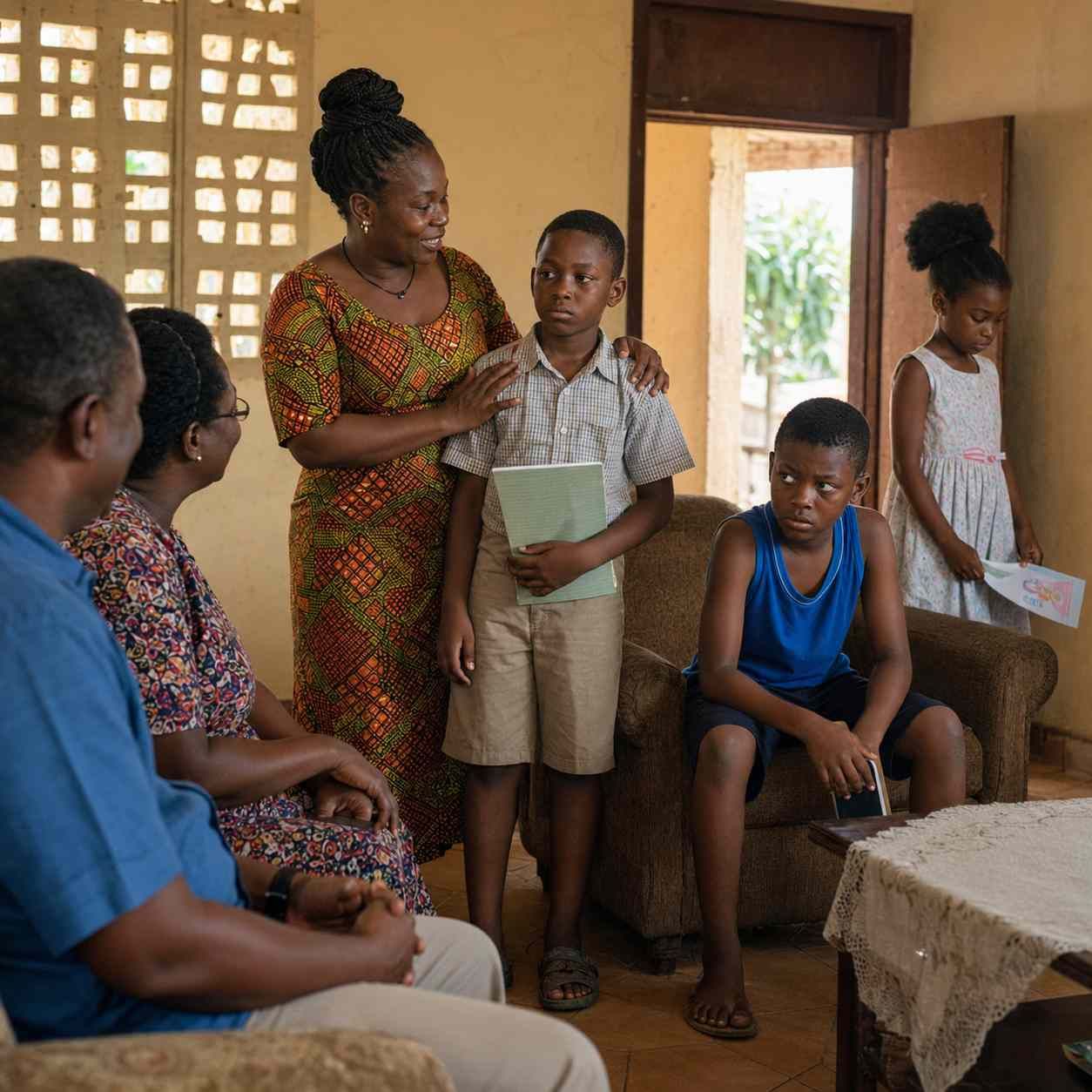
When Parental Favoritism Divides Siblings
“Favoritism may look small to a parent, but to a child it can feel like a verdict on their worth.”
A mother had three children. Whenever visitors came, she spoke proudly about one of them.
“He is the brilliant one.”
“He is the responsible one.”
“He is the child I can depend on.”
The other children heard those words too. Although no one complained openly, something gradually changed. One child stopped trying to impress her, while another became determined to outperform his brother. The favored child carried a different burden: the pressure to remain the “good one.”
Years later, all three children became successful adults, but the closeness they once shared was gone. Their parents wondered what had happened.
Sometimes, the answer begins in childhood.
The Hidden Wounds of Favoritism
Favoritism can create psychological wounds that remain long after children leave home. A child who repeatedly feels overlooked may begin to believe:
“I am not important.”
“I am not good enough.”
“I must compete to be loved.”
The favored child may also suffer. Constant praise can create pressure, guilt, entitlement, or a deep fear of disappointing the parent whose approval has become central to the child’s identity.
Over time, these experiences can lead to resentment, low self-esteem, unhealthy competition, emotional distance, and sibling relationships built around comparison instead of connection.
Different Does Not Mean Less Valuable
Most parents do not intend to create these wounds. One child may be easier to manage, perform better academically, or follow instructions more quickly. However, children have different personalities, abilities, and emotional needs.
Different children require different kinds of support. Different does not mean less valuable.
Romans 12:10 reminds us:
“Be kindly affectioned one to another with brotherly love; in honour preferring one another.”
Love should never become a competition inside the home.
Rebuilding Fairness and Connection
Parents should honestly consider whether their words make one child feel more valuable than another. Do you celebrate your children’s differences, or do you constantly rank them? Have you given them labels they are now struggling to escape?
Pay close attention to how you speak to and about your children. Affirm their individual strengths. Correct them without making comparisons. Celebrate their achievements without creating rivalry.
If favoritism has already caused emotional distance, begin the conversation while healing is still possible. Listen without becoming defensive, acknowledge the pain your actions may have caused, and work patiently to rebuild trust.
Your children should never have to compete for a place in your heart.
Share this article with a parent who needs this reminder, and return for the next conversation as we continue uncovering the hidden family patterns that shape identity, relationships, and mental wellbeing.
By Dr. David Rex Orgen, Best-Selling Author and International Mental Health Expert

Recent Posts

When Parental Favoritism Divides Siblings

When Parents Compare Their Children

When Family Conflict Becomes an Inherited Wound
Tags
+1 (614) 753-3925
info@inspiremindglobal.com
