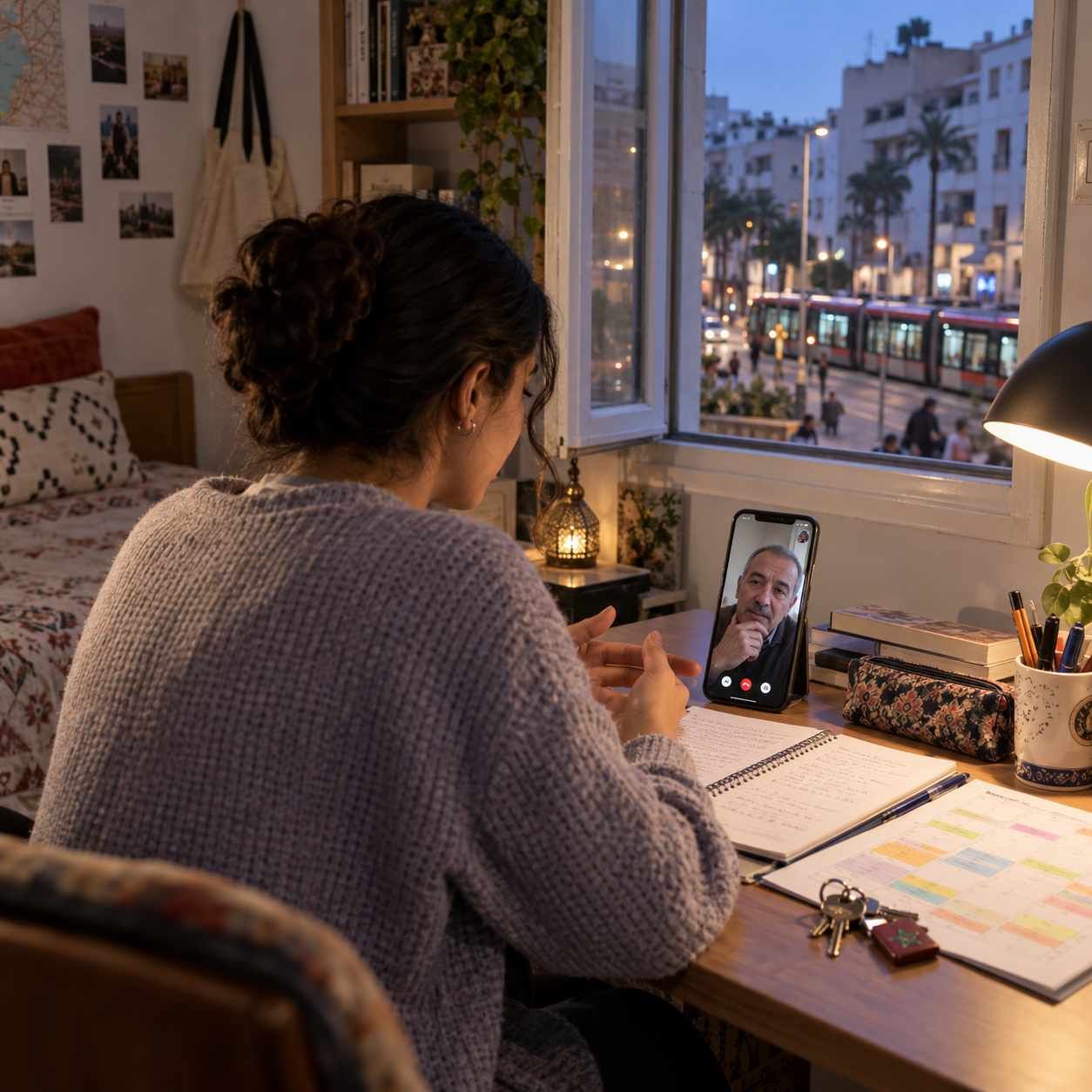
Amina grew up near a small town in Morocco before earning admission to continue her education in Casablanca. Her mother celebrated the opportunity, but her father worried about what awaited her in the city.
“The city is different,” he told her. “Who will watch over you?”
Amina understood his concern, but she also heard a deeper question: How much freedom should a daughter be allowed to have?
Life in Casablanca was both exciting and overwhelming. The city moved quickly, expectations felt unfamiliar, and Amina missed the daily protection of her family. At home, some relatives wondered whether education was making her disrespectful. At school, classmates sometimes treated her rural background as something she should hide.
She felt pressured to prove two things at once: that she had not forgotten where she came from and that she belonged in the city.
When Secrecy Creates More Suspicion
Moving away for education can change more than a person’s location. It can reshape family roles, gender expectations, confidence, and even the meaning of obedience.
At first, Amina tried to keep her two lives separate. She shared little with her family and allowed her classmates to make assumptions about her background. Instead of protecting her relationships, the secrecy made everyone more suspicious.
Things began to improve when Amina and her father made their conversations more specific. She explained her timetable, housing arrangements, friendships, and long-term goals. Her father, in turn, began expressing the fears that had previously appeared only as rules.
Their honesty helped both of them understand what was truly at stake.
Finding Freedom Through Wisdom and Trust
Amina also found an older female mentor who understood the opportunities of city life without dismissing her family’s values. The mentor did not tell her to rebel or simply obey. She helped Amina develop sound judgment.
Freedom without wisdom can leave a young person unprepared. Yet protection without trust can prevent that person from developing the confidence needed to make responsible decisions.
Amina and her family eventually agreed on clear boundaries and regular communication. As trust grew, she also stopped apologizing for her rural upbringing. Her background was not something she needed to hide to succeed in Casablanca.
Young people who leave home for education do not have to reject their families to grow. At the same time, loyalty should not require them to shrink every new possibility.
Parents must also recognize that protecting a daughter means preparing her to make wise decisions, not preventing her from developing judgment. Education may place a young woman between gratitude and freedom, but healthy families do not force her to choose one over the other.
They create enough trust for growth and belonging to remain part of the same conversation.
Share Amina’s story with families preparing a young person for life beyond home.
By Dr. David Rex Orgen, Best-Selling Author and International Mental Health Expert