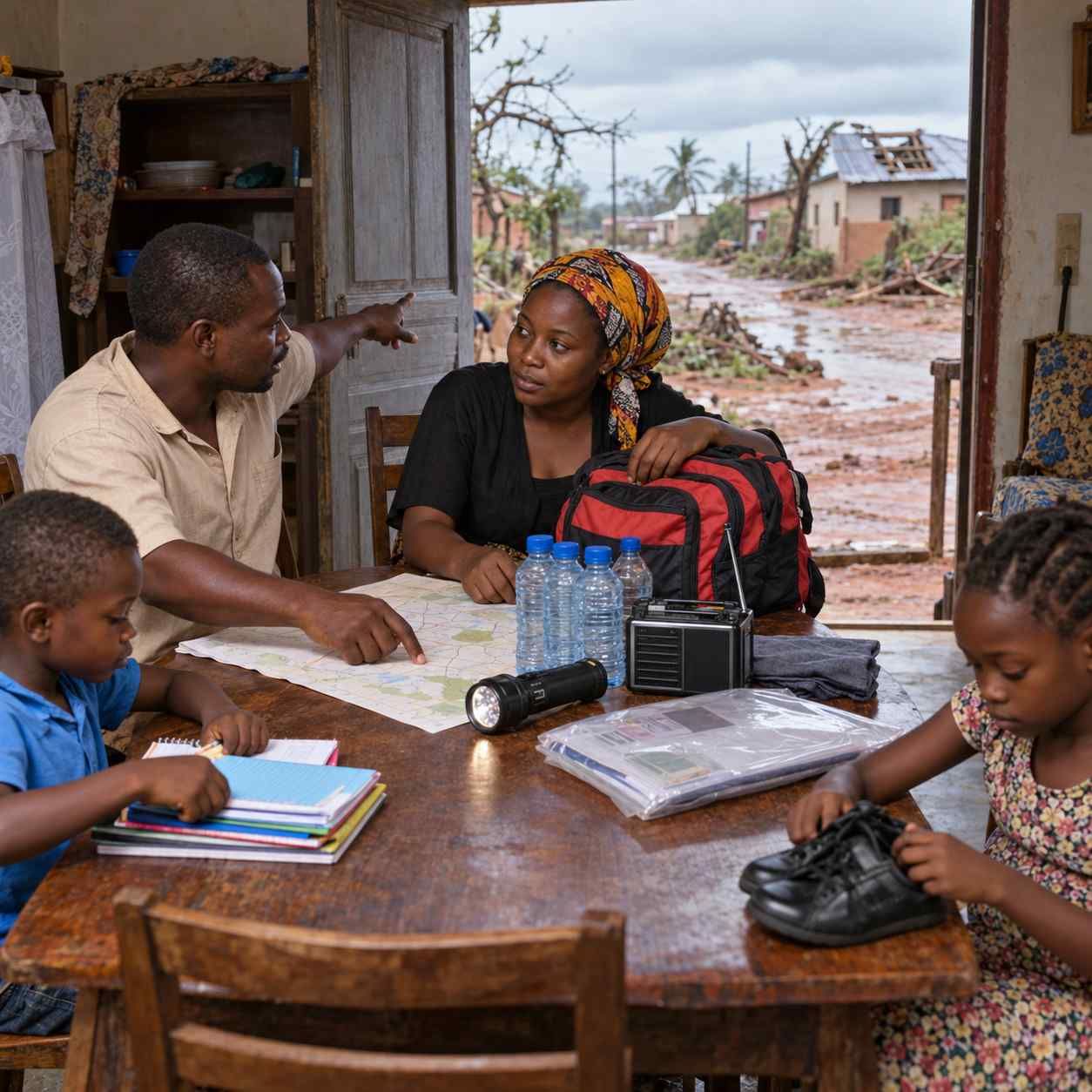
After a powerful storm damaged Celina’s community in Mozambique, her family moved to another district to stay with relatives.
At first, everyone expected the arrangement to be temporary. They spoke often about returning home. But weeks turned into months, the children’s education remained disrupted, and reliable work was difficult to find.
Whenever rain began to fall, Celina felt tense, even when there was no immediate danger. Her husband wanted to rebuild their home quickly, but Celina feared returning to the same vulnerability.
Their disagreement soon became personal.
“You have given up on home,” her husband told her.
“You are pretending nothing happened,” she replied.
When Recovery Looks Different
Disasters can divide families through more than physical loss. People often respond to danger in different ways. One person may need to return home to recover a sense of identity, while another may need distance before feeling safe again.
Celina and her husband eventually stopped arguing about who was more courageous. Instead, they began discussing the practical issues facing their family: safe housing, employment, schooling, weather warnings, evacuation plans, and their children’s wellbeing.
They agreed on a gradual approach. Her husband would return first to assess the damage and rebuilding options, while Celina remained with the children. Together, they established conditions that would guide their next decision.
Planning Can Restore Confidence
The couple also involved their children in simple emergency planning without burdening them with adult fears. The family identified where they would go, what they would carry, and whom they would contact if another emergency occurred.
A plan could not guarantee their safety, but it reduced the helpless feeling that every dark cloud controlled their future.
Celina also spoke with other women who experienced fear during heavy rain. Hearing similar experiences helped her understand that her reaction was not something to be ashamed of.
Families displaced by disaster should expect recovery decisions to involve emotion as well as logic. People who endure the same event may not heal or regain confidence at the same pace.
Support must also continue after the immediate emergency has passed and public attention has moved elsewhere. Families still need safe housing, reliable livelihoods, education, accurate information, and emotional care.
Celina’s story reminds us that rebuilding is about more than replacing damaged walls. It means restoring enough safety for a family to imagine tomorrow without being ruled entirely by yesterday’s storm.
Share Celina’s story with communities rebuilding after disaster.
By Dr. David Rex Orgen, Best-Selling Author and International Mental Health Expert