

Helping Children Belong Across Two Cultures
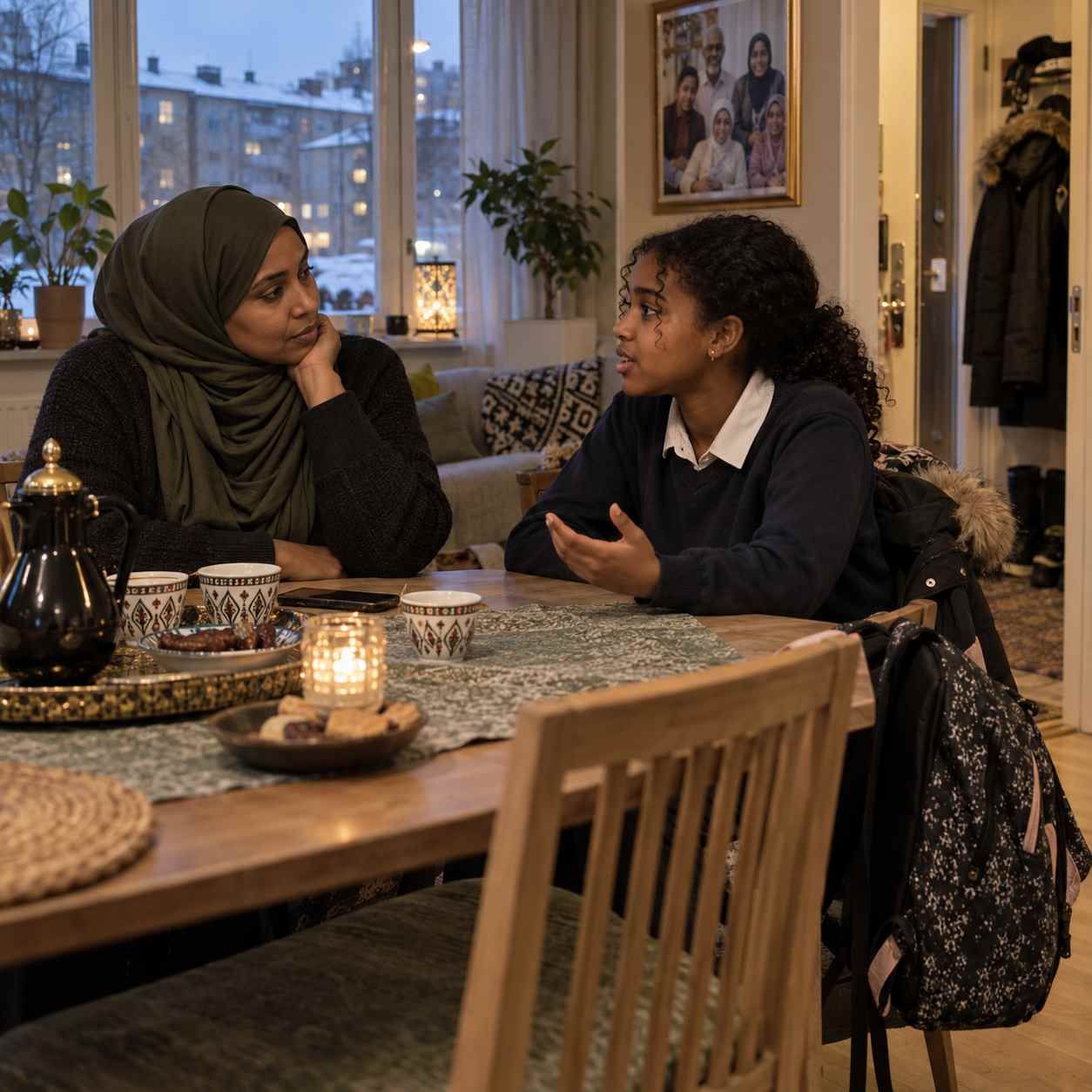
At home in Stockholm, Amina called her 12-year-old daughter Hani. At school, however, her daughter asked everyone to call her Hanna.
Amina discovered the change during a parent meeting. On the way home, she asked why her daughter had changed her name.
“Because people can say Hanna,” Hani explained. “And they stop asking questions.”
The answer hurt Amina. She had chosen the name Hani because it carried family history, meaning, and hope. Yet for her daughter, the name had become an explanation she was tired of giving.
Caught Between Home and School
Their disagreements soon extended beyond her name. Amina wanted Somali spoken at home, but Hani often answered in Swedish. Amina valued modest clothing and close family involvement, while Hani wanted the freedom she saw among her classmates.
Both began to view the other’s behavior as rejection. Amina feared her daughter was becoming ashamed of their family. Hani felt her mother did not understand the life she faced outside their home.
Children in immigrant families often grow within two cultural systems. At home, they may inherit their parents’ language, faith, traditions, and responsibilities. Outside, they learn the expectations of the country where they are growing up.
Living between cultures can create flexibility, confidence, and a rich sense of identity. It can also create pressure when children believe they must choose one culture over the other.
Parents may fear losing their children to a new way of life. Children may fear that speaking honestly will be treated as disrespect.
Listening Before Correcting
Amina’s perspective began to change when she stopped treating every difference as disobedience. Instead, she asked Hani what happened when classmates heard her name.
Hani described the jokes, repeated mispronunciations, and exhaustion of constantly being asked where she was “really” from. This time, Amina listened without immediately correcting her.
Hani also listened as her mother explained why their language and family traditions mattered so deeply. To Amina, they were not meaningless restrictions. They were connections to grandparents, family history, and a community that migration had already scattered across different places.
Mother and daughter did not suddenly agree on everything. However, they began negotiating instead of accusing each other.
Hani decided that her friends could learn to pronounce her name correctly. Amina accepted that her daughter could belong in Sweden without becoming any less Somali.
Preserving Identity Through Relationship
Parents raising children in a new culture should preserve identity through relationship, not fear alone. Children are more likely to value traditions when they understand their meaning and feel safe discussing the pressures they face outside the home.
Children of immigrants may also benefit from recognizing that a parent’s concern can contain grief as well as control. Understanding that fear does not require accepting every rule, but it can create a more respectful beginning for difficult conversations.
Amina and Hani’s experience shows that identity does not always require choosing between two names or two homes. Sometimes maturity means understanding that both cultures can belong within the same person.
By Dr. David Rex Orgen, Best-Selling Author and International Mental Health Expert

Archives
Recent Posts
Helping Children Belong Across Two Cultures
Jean-Paul’s Key: Carrying Home After Displacement

When Winter Deepens the Loneliness of Migration
Tags
+1 (614) 753-3925
info@inspiremindglobal.com