

Kofi Missed the Funeral: Grieving Across Borders
Kofi was at work in New York when his sister called from Kumasi to tell him their father had died.
For several minutes, he could not speak. He had talked with his father only two days earlier and promised to call again over the weekend. Now, that call would never happen.
As his family began planning the funeral, Kofi searched for flights, requested time away from work, and reviewed his immigration documents. The airfare was expensive, his employer could not guarantee sufficient leave, and travelling could jeopardize his ability to return to the United States.
His relatives continued asking when he was coming home. Kofi kept saying he was trying, until he finally had to accept that he would not be there.
Watching From a Distance
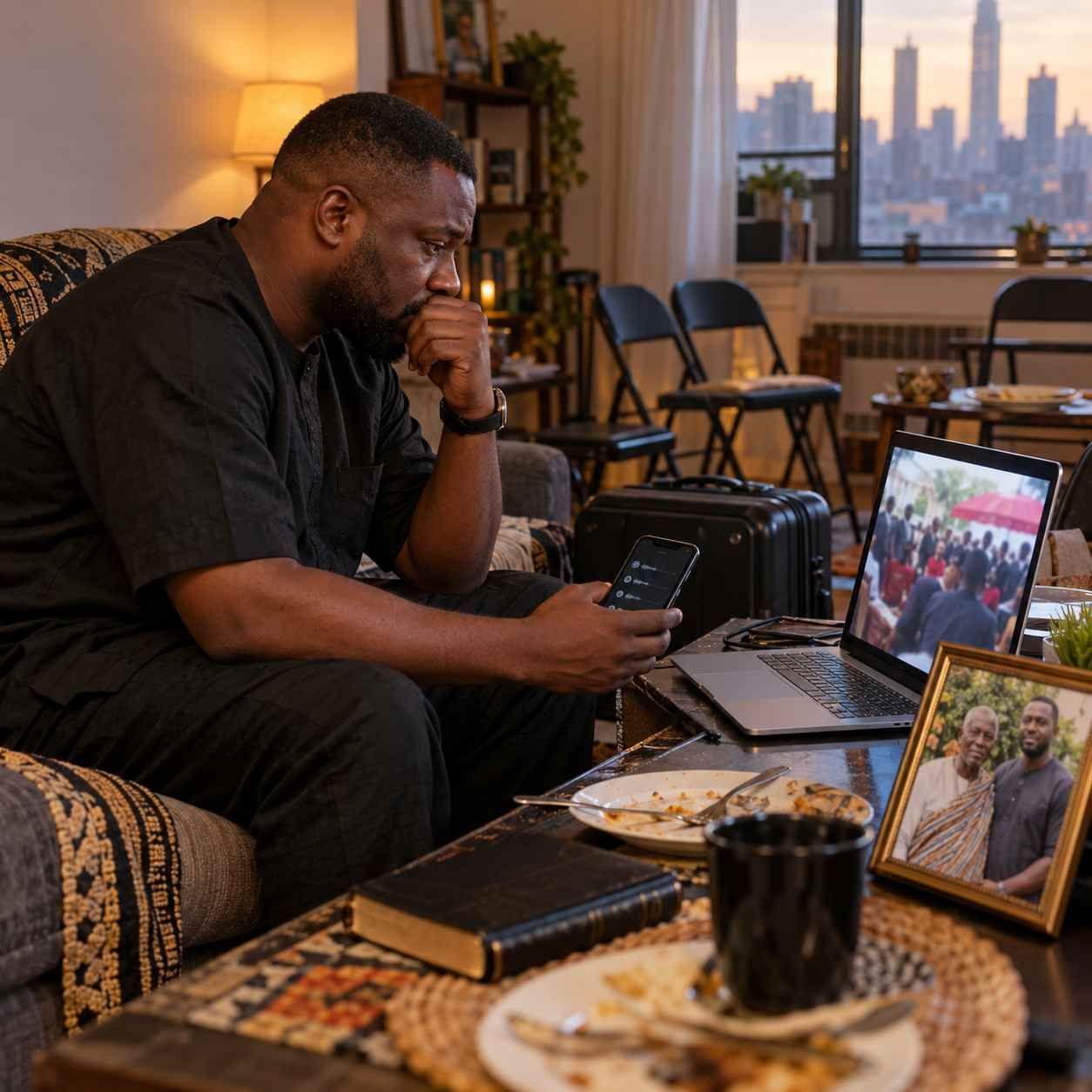
On the day of the funeral, Kofi dressed in black and joined his family through a livestream. The connection repeatedly froze. When relatives filed past his father’s casket, Kofi reached out and touched the screen.
When the ceremony ended, he closed his laptop and sat alone in his apartment.
Grief is painful in any circumstance, but migration can add distance, guilt, financial pressure, legal restrictions, and the loss of familiar communal rituals. Someone living abroad may also be expected to contribute heavily toward funeral expenses while mourning without the physical comfort of family.
Kofi blamed himself for leaving Ghana. He replayed missed calls and wondered whether his father had felt abandoned.
Guilt often tries to rewrite what cannot be changed. It can make a person question their love simply because circumstances made their presence impossible.
Giving Grief Somewhere to Go
A Ghanaian pastor in New York encouraged Kofi to hold a local remembrance. Friends gathered around him to pray, share a meal, and listen as he told stories about his father.
Later, Kofi’s sister sent voice messages from relatives describing the funeral and sharing their final memories. The family also agreed to hold a smaller remembrance when Kofi could safely return home.
None of these gestures replaced being at the funeral. They did, however, give Kofi a way to express his grief instead of carrying it alone.
If you are mourning someone from another country, do not allow physical absence to convince you that your relationship was less meaningful. Participate in whatever ways remain possible. Share stories, write a tribute, pray with others, or create a personal ritual of remembrance.
Families should also be careful not to judge relatives who cannot return for a funeral. Financial pressures, employment responsibilities, health concerns, or immigration restrictions may prevent them from travelling.
Instead of measuring love only through physical attendance or financial contributions, ask how the grieving person can participate and how the family can support them from a distance.
Kofi’s story reminds us that grief also migrates. It crosses time zones, sits beside unopened suitcases, and enters rooms where no one else knew the person who died.
Sometimes, saying goodbye means creating a small circle of home wherever you are. When someone is grieving far from family, do more than send condolences. Sit with them and give their sorrow somewhere to be heard.
By Dr. David Rex Orgen, Best-Selling Author and International Mental Health Expert

Archives
Recent Posts

Kofi Missed the Funeral: Grieving Across Borders

Celina’s Road After the Storm: Rebuilding Safety

Thandi’s Foreignness Next Door
Tags
+1 (614) 753-3925
info@inspiremindglobal.com