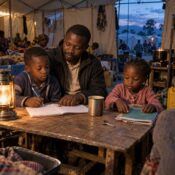
Grace lived near a Ugandan community that was receiving families who had fled violence across the border. At first, she responded with compassion, bringing food and clothing to help the newcomers.
Over time, however, the local clinic grew busier, classrooms became more crowded, and water was harder to access. Some residents began to feel that the displaced families were receiving more attention than people whose needs had existed long before the newcomers arrived.
Grace understood both sides. She recognized the suffering of families forced from their homes, but she also understood the frustration within her own community.
When Scarcity Fuels Resentment
Host communities are often described as either welcoming or hostile, but the reality is rarely so simple. Compassion can exist alongside scarcity, and hospitality can weaken when local people feel overlooked by support systems.
As tensions increased, rumors began to spread. A disagreement at the market was retold as evidence that all newcomers were dangerous. Genuine concerns about limited resources were gradually turning into blame.
Grace joined a committee that brought local women and refugee representatives together. Instead of speaking about one another, they began speaking directly to one another.
The group identified shared concerns, including water, school space, safety, and livelihoods. They could not solve every problem, but the conversation changed how people understood them. These were no longer divided into “their problems” and “our problems.” They became community challenges that deserved fair attention.
Building Cooperation Through Shared Work
The women also organized a small market day where local and displaced families could sell food and household goods. It did not end the scarcity, but it allowed people to meet as workers, mothers, customers, and neighbors rather than as competing groups.
Grace learned that welcoming displaced people did not mean ignoring the hardships facing her own community. The displaced women also came to understand that local frustration was not always rooted in personal hatred.
Refugee programs are more effective when host communities are included in both planning and benefits. Assistance that appears unequal can unintentionally deepen resentment, even when it is intended to help.
At the same time, people living in host communities must be careful not to direct legitimate frustration toward families who have already lost their homes, relatives, and sense of security.
Grace’s story shows that peaceful coexistence requires more than asking people to be kind. It requires fair systems, honest conversations, and spaces where rumors cannot grow unchecked.
Sometimes peace begins when struggling neighbors refuse to treat one another as the cause of every hardship.
By Dr. David Rex Orgen, Best-Selling Author and International Mental Health Expert